
If you’ve been struggling with persistent heel pain, Achilles pain, tennis elbow or another stubborn tendon injury that just won’t settle, you may have heard about Shockwave Therapy.
Shockwave Therapy has become an increasingly popular treatment for chronic tendon conditions, but it’s important to understand what it can—and can’t—do. At SPHC, we use Shockwave Therapy as part of a comprehensive treatment plan, rather than relying on it as a “quick fix.”
What is Shockwave Therapy?
Shockwave Therapy (also known as Extracorporeal Shockwave Therapy or ESWT) is a non-invasive treatment that delivers high-energy acoustic waves to injured tissue.
These sound waves stimulate a biological response within the tendon and surrounding tissues, helping to reduce pain and encourage healing. Research suggests Shockwave Therapy may promote:
- Tissue regeneration through mechanotransduction (the process of converting mechanical stimulation into cellular responses)
- Increased blood vessel formation (angiogenesis) and improved circulation
- Cell proliferation and protein production
- Pain modulation
- Breakdown of calcific deposits in certain tendon conditions
While the exact mechanisms are still being researched, studies consistently show that Shockwave Therapy can change tendon and fascia properties while also providing a significant pain-modulating effect.
When is Shockwave Therapy most helpful?
Shockwave Therapy is primarily used for chronic tendon problems—particularly when symptoms have persisted for several months and haven’t responded fully to other treatments.
It’s important to know that Shockwave Therapy is rarely a standalone treatment.
Instead, it works best as an adjunct to physiotherapy.
For many patients, Shockwave Therapy provides a valuable “window” of pain relief. When pain settles enough, patients are finally able to perform the strengthening exercises and rehabilitation that actually address the underlying problem.
Think of it like opening a door—Shockwave Therapy may reduce pain enough to allow effective rehabilitation to begin.
Conditions with the strongest evidence
Research currently shows the strongest support for Shockwave Therapy in:
Most effective
- Plantar fasciopathy (plantar fasciitis)
Effective as an adjunct treatment
- Mid-portion Achilles tendinopathy
- Proximal hamstring tendinopathy
- Calcific rotator cuff tendinopathy
Growing evidence with positive results
- Gluteal tendinopathy
- Patellar tendinopathy (jumper’s knee)
- Lateral elbow tendinopathy (tennis elbow)
- Rotator cuff tendinopathy
Like all treatments, outcomes vary from person to person, which is why an assessment with a physiotherapist is essential to determine whether Shockwave Therapy is appropriate for your condition.
What does treatment involve?
A Shockwave Therapy session is relatively quick, usually lasting around 10–15 minutes.
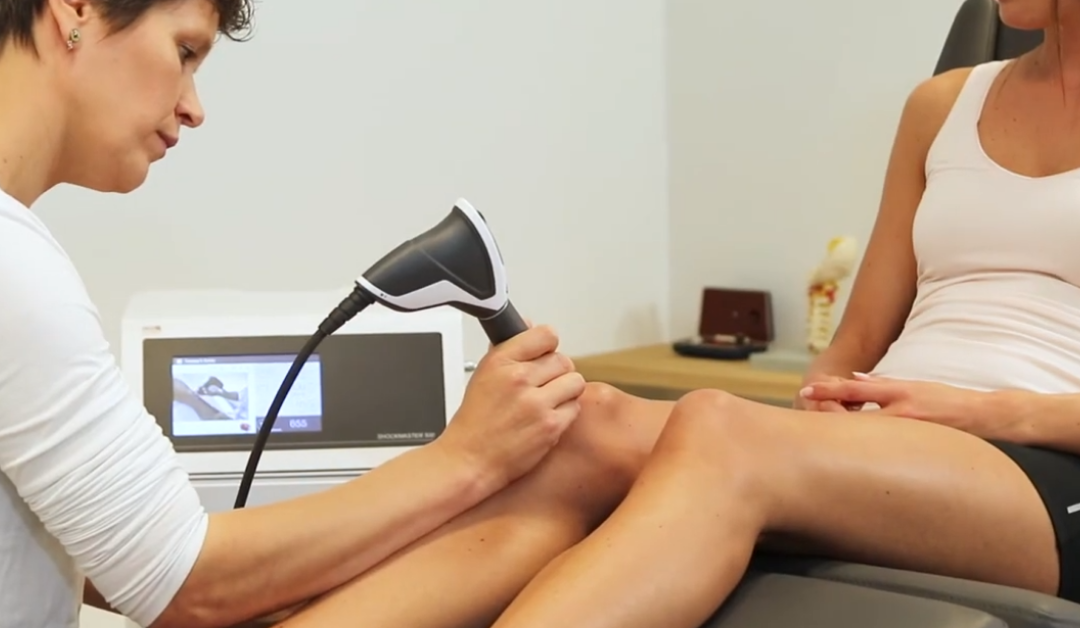
During treatment, a handheld device delivers a series of acoustic pulses to the affected area. Most patients describe the sensation as uncomfortable rather than painful, and the intensity can be adjusted to suit your tolerance.
The majority of research has been conducted using:
- 3–4 treatment sessions
- One treatment per week
- Approximately 1,500–3,000 shockwaves per session
Your physiotherapist will tailor the treatment plan to your individual condition and goals.
Is Shockwave Therapy enough on its own?
Usually, no.
Although Shockwave Therapy can reduce pain and stimulate healing, the best long-term outcomes occur when it is combined with:
- Individualised strengthening exercises
- Progressive loading programs
- Activity modification
- Education about your condition
- Manual therapy where appropriate
Addressing the underlying cause of the tendon overload is what helps keep symptoms from returning.
Is Shockwave Therapy right for you?
Shockwave Therapy may be worth considering if:
✔ You’ve had tendon pain for several months
✔ Rest hasn’t solved the problem
✔ Previous treatments have provided only temporary relief
✔ Pain is preventing you from completing your rehabilitation exercises
Our physiotherapists can assess your injury and determine whether Shockwave Therapy is likely to benefit you as part of your overall treatment plan.
See our Shockwave machine in action
Curious about what treatment looks like?
Watch our Shockwave Therapy machine in action here:
https://youtu.be/UThu-Taigy0?si=1Xmg-QN2nzgeIzD8
Ready to get moving again?
If persistent tendon pain is stopping you from doing the things you enjoy, our team at SPHC, can help determine whether Shockwave Therapy is appropriate for you.
Book an assessment with one of our physiotherapists today and let’s work together to get you back to doing what you love. Call today on 07 3869 1099 or BOOK ONLINE.